
THE EARLY YEARS, FOUNDATION - YEAR 2
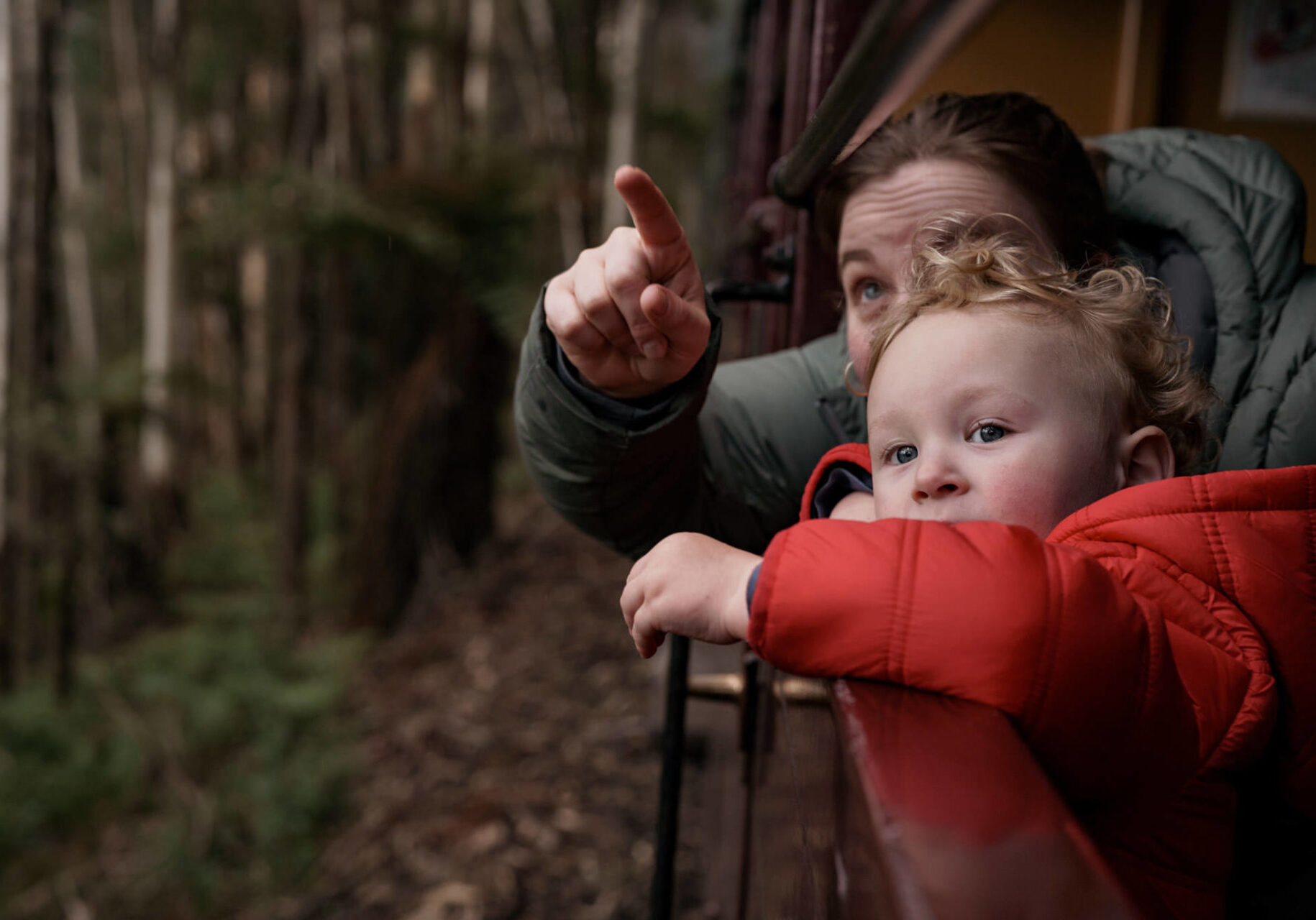
Calling all students for a journey of endless discovery aboard Puffing Billy and connect with nature on an adventure through the magnificent forests of the Dandenong Ranges. Develop an understanding and appreciation of place and the importance of community. Discover the Lakeside Visitor Centre, use your curiosity and imagination to explore technology and stories of the past and present.
Curriculum links
The Early Years Framework for Australia
Belonging, Being, Becoming. The five Learning Outcomes are designed to capture the integrated and complex learning and development of all children across birth to five years of age.
Learning Outcomes
Children have a strong sense of identity. Children are connected with and contribute to their world. Children have a strong sense of wellbeing. Children are confident and involved learners. Children are effective communicators.
| Level | Strand | Sub-Strand | Content Description |
|---|---|---|---|
| LevelLevel A (Towards Foundation) | StrandCritical and Creative Thinking | Sub-Strand | Content DescriptionReact to the world around them (VCCCTQ055) |
| Level | StrandDesign and Technologies | Sub-Strand | Content DescriptionExperience how people create familiar designed solutions to meet their needs (VCDSTS001) |
| Level | StrandGeography | Sub-StrandGeographical concepts and skills | Content DescriptionExperience and react to a place and its features (VCGGC001) |
| Level | StrandHistory | Sub-StrandHistorical concepts and skills | Content DescriptionExplore objects from the past and present (VCHHC004) |
| Level | StrandScience | Sub-StrandBiological Science | Content DescriptionLiving things are part of the world around us (VCSSU002) |
| LevelLevel B (Towards Foundation) | StrandDesign and technologies | Sub-StrandTechnologies Contexts | Content DescriptionExplore the characteristics and properties of familiar designed solutions in at least one technologies context (VCDSTC005) |
| Level | StrandGeography | Sub-StrandGeographical knowledge | Content DescriptionMoving to different places and recognising some features/places on the way (VCGGK021) |
| Level | Strand | Sub-StrandGeographical knowledge | Content DescriptionExperience specific activities in a place (VCGGK027) |
| Level | StrandHistory | Sub-StrandHistorical concepts and skills | Content DescriptionExplore features of objects from the past and present (VCHHC017) |
| Level | Strand | Sub-StrandHistorical knowledge | Content DescriptionExplore different technologies used to make their daily life better (VCHHK026) |
| LevelLevel C (Towards Foundation) | StrandDesign and Technologies | Sub-StrandTechnologies Contexts | Content DescriptionExamine and indicate the characteristics and properties of familiar designed solutions in at least two technologies contexts (VCDSTC008) |
| Level | StrandGeography | Sub-StrandGeographic concepts and skills | Content DescriptionLink places to their related activities and special events (VCGGC031) |
| Level | StrandHistory | Sub-StrandHistorical concepts and skills | Content DescriptionExplore their perspective on how things have changed from past and present in their daily life (VCHHC029) |
| Level | StrandScience | Sub-StrandScience Understanding | Content DescriptionLiving things have different names and parts (VCSSU022) |
| LevelLevel D (Towards Foundation) | StrandDesign and Technology | Sub-StrandTechnologies and society | Content DescriptionExplore how people create familiar designed solutions and identify their ability to meet personal and local community needs (VCDSTS010) |
| Level | StrandGeography | Sub-StrandGeographical knowledge | Content DescriptionThe major features of a place and their location (VCGGK054) |
| Level | Strand | Sub-Strand | Content DescriptionWhat people do in specific spaces (VCGGK055) |
| Level | StrandHistory | Sub-StrandHistorical concepts and skills | Content DescriptionIdentify and compare features of objects used by the family from the past and present (VCHHC043) |
| Level | Strand | Sub-StrandCommunity Histories | Content DescriptionExplore and sequence the history of a significant place, person or building or site (VCHHK050) |
| Level | StrandScience - | Sub-StrandScience Understanding | Content DescriptionLiving things can be plants or animals (VCSSU032) |
| Curriculum Area | Strand | Sub-Strand | Content Description |
|---|---|---|---|
| Curriculum AreaCritical and Creative Thinking | StrandQuestions and Possibilities | Sub-Strand | Content DescriptionDifferent kinds of question stems for gathering information and ideas (VC2CC2Q01) |
| Curriculum AreaHistory | StrandHistorical Concepts and Skills | Sub-StrandHistorical significance | Content DescriptionIdentify the significance of an individual, event and/or place (VC2HH2S07) |
| Curriculum Area | Strand | Sub-StrandContinuity and change | Content DescriptionIdentify examples of continuity and change by comparing the past and present (VC2HH2S05) |
| Curriculum Area | Strand | Sub-StrandHistorical Significance | Content DescriptionIdentify the significance of an individual, event and/or place (VC2HH2S07) |
| Curriculum Area | StrandHistorical Knowledge and Understanding | Sub-StrandCommunity Histories | Content DescriptionThe history of a local historical site of social, cultural or spiritual significance and how it has changed over time (VC2HH2K05) |
| Curriculum Area | Strand | Sub-Strand | Content DescriptionThe consequences of changing technologies on people’s lives at home, and the ways they worked, travelled and communicated in the past (VC2HH2K06) |
| Curriculum Area | Strand | Sub-Strand | Content DescriptionIdentify perspectives of people in the past or present in sources (VC2HH2S04) |
| Curriculum AreaGeography | StrandGeographical Knowledge and Understanding | Sub-StrandPlaces and our Connections to them | Content DescriptionThe places in which they live, why their places are important to them, the features of places, and how places can be looked after (VC2HG2K01) |
| Curriculum Area | Strand | Sub-Strand | Content DescriptionThe natural and constructed features of places, how they change and how they can be cared for (VC2HG2K05) |
| Curriculum Area | Strand | Sub-Strand | Content DescriptionThe places in which they live, why their places are important to them, the features of places, and how places can be looked after (VC2HG2K01) |
| Curriculum Area | Strand | Sub-Strand | Content DescriptionWeather and seasons, including Aboriginal and Torres Strait Islander Peoples’ seasonal calendars (VC2HG2K06) |
| Curriculum Area | StrandGeographical skills | Sub-StrandCommunicating | Content DescriptionDevelop narratives and share observations about places, using sources such as maps and photographs (VC2HG2S05) |
| Curriculum Area | Strand | Sub-StrandGeographical Inquiry | Content DescriptionCollect, sort and record information and data from observations, including from fieldwork and maps (VC2HG2S02) |
| Curriculum AreaHealth and Physical Education | StrandMovement and Physical Activity – Physical Education | Sub-StrandMaking Active Choices | Content DescriptionParticipate safely in a range of activities in outdoor environments and aquatic settings and explore the benefits of being physically active (VC2HPFM03) |
| Curriculum AreaDesign and Technologies | StrandTechnologies Contexts | Sub-StrandEngineering Principles and Systems | Content DescriptionExplore how technologies affect movement in products and systems (VC2TDE2C01) |
| Curriculum Area | Strand | Sub-StrandMaterials and Technologies specialisations | Content DescriptionExplore the characteristics and properties of materials and components that are used to create designed solutions (VC2TDE2C04) |
| Curriculum Area | StrandCreating Designed Solutions | Sub-StrandGenerating and Designing | Content DescriptionExplore, generate and communicate design ideas through describing, drawing or modelling, using manual and digital tools (VC2TDE2D02) |
| Curriculum Area | Strand | Sub-StrandProducing and Implementing | Content DescriptionUse materials, components, tools and techniques to safely make designed solutions (VC2TDE2D03) |
| Curriculum AreaScience | StrandScience Understanding | Sub-StrandPhysical Sciences | Content DescriptionThe way objects move depends on a variety of factors including their size, shape and material (VC2S2U10) |
| Curriculum Area | Strand | Sub-Strand | Content DescriptionPushes and pulls are forces that can change an object’s movement or shape and can be represented in terms of strength and direction (VC2S2U11) |
| Curriculum Area | Strand | Sub-StrandBiological Sciences | Content DescriptionPlants and animals have observable features that can be used to group them in different ways (VC2S2U01) |
| Curriculum Area | Strand | Sub-Strand | Content DescriptionPlants and animals have basic needs, including air, water, food and shelter; the places where they live meet those needs (VC2S2U02) |
| Curriculum Area | Strand | Sub-StrandChemical Sciences | Content DescriptionMaterials can be combined in a variety of ways for particular purposes; the properties of objects and mixtures can differ from the properties of the materials from which they are made (VC2S2U05) |
| Curriculum Area | Strand | Sub-Strand | Content DescriptionMaterials can be changed physically by different actions without changing their material composition, including by bending, twisting, stretching, crushing, squashing and breaking into smaller pieces (VC2S2U06) |
| Curriculum Area | StrandScience Inquiry | Sub-StrandQuestioning and predicting | Content DescriptionExperiences can be used as a basis for posing questions to explore observed patterns and relationships, and to make predictions (VC2S2I01) |
| Curriculum Area | Strand | Sub-StrandPlanning and conducting | Content DescriptionScientific questions and predictions can be investigated safely by following procedures that have sequenced steps (VC2S2I02) |
| Curriculum AreaVisual Arts | StrandExploring | Sub-Strand | Content DescriptionExplore where, when, why and how people across cultures, communities, times, places and/or other contexts experience visual arts, including artworks created by Aboriginal and Torres Strait Islander Peoples (VC2AVA2E01) |
| Curriculum Area | StrandCreating | Sub-Strand | Content DescriptionUse visual conventions, visual arts processes and materials to create artworks that communicate ideas, experiences and observations (VC2AVA2C01) |
| Curriculum Area | StrandPresenting | Sub-Strand | Content DescriptionPresent and share artworks in informal settings (VC2AVA2P01) |
Teacher & Student Resources
Puffing Billy Railway offers a range of pre and post excursion curriculum-linked resources to support teaching and learning in the classroom and at home. All resources are based around the topics of Energy, Force and Motion, Past and Present, Design and Technology and Biodiversity.
Do trains push or pull?
Our Community
Under Construction
Map my journey
The puff in Puffing Billy
Characters of the railway
Game changer
The Wonders of Wildlife
Teachers are welcome to download this workbook for the students to use while they are onsite at Puffing Billy Railway.
- Workbook |Download(opens in new tab)
Program details and information
Belgrave to Lakeside
| Fare type | One way ^ | Return |
|---|---|---|
| Fare typeKinder, P-10 students* | One way ^$31.40 | Return$37.70 |
| Fare typeVCE students* | One way ^$45.35 | Return$55.25 |
| Fare typeAdult* | One way ^$46.35 | Return$59.40 |
*These discounted rates only apply during school terms and are not available during school holidays or on public holidays.
^ Note: Single Journeys require bus pick up from Lakeside or Menzies Creek.
PLEASE NOTE
- Guided Programs are led by Education Officer and include:
- A Puffing Billy train journey.
- An educator-led, curriculum-aligned, education workshop.
- An exploration of the natural environment.
- The Additional Teacher/Leader Rate includes train fare plus guided program.
- SPECIAL NEEDS GROUPS – Additional Carers charged at student rates.
Please note that Puffing Billy Education excursion prices will increase from 1st of April, 2027. All excursions booked for dates from 1st of April 2027 onwards will be charged at the new rates listed below.
| Fare type | One way ^ | Return |
|---|---|---|
| Fare typeKinder, P-10 students* | One way ^$35.50 | Return$42.50 |
| Fare typeVCE students* | One way ^$47.15 | Return$57.45 |
| Fare typeAdult* | One way ^$56.60 | Return$70.55 |
| Group Type | Teacher/Leader to Student Ratio |
|---|---|
| Group TypeSpecial Needs Groups | Teacher/Leader to Student Ratio1:1 |
| Group TypeEarly Years | Teacher/Leader to Student Ratio1:5 |
| Group TypePrimary | Teacher/Leader to Student Ratio1:10 |
| Group TypeSecondary | Teacher/Leader to Student Ratio1:10 |
| Group TypeTertiary | Teacher/Leader to Student Ratio1:20 |
DURATION
Half Day (approx. 10.30 am - 2.30 pm)
AVAILABILITY
Monday - Friday during the Victorian School Terms
LOCATION
OPTION 1 | RETURN JOURNEY
Meet the Education Officer at Belgrave Station at 10:00am for an 11:00am departure (approx. 1-hour journey). Disembark at Lakeside Station at 11:55am. Enjoy lunch, the Lakeside Visitor Centre, an Educator led workshop and the natural surrounds. Board Puffing Billy at 2:15pm and return to Belgrave Station at approx. 3:10pm.OPTION 2 | SINGLE JOURNEY
Meet the Education Officer at Belgrave Station at 10:00am for an 11:00am departure (approx. 1-hour journey). Disembark at Lakeside Station at 11:55am. Enjoy lunch, the Lakeside Visitor Centre, an Educator led workshop and the natural surrounds. Depart on your school bus from Lakeside at 2:15pm. Other options can be scheduled. according to Puffing Billy Railway timetable.
Enquiries
Enquire about our guided excursions via our online form.
Please contact the Education team for any further questions by emailing info@pbr.org.au or calling 03 9757 0700.